Translate

Monday, February 27, 2012

Iraq invites Indian entrepreneurs for reconstruction programme


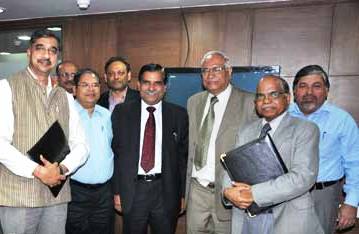
Dy. Prime Minister and Trade Minister of Iraq, Dr. Rowsch Shaways meeting the Union Minister for Commerce and Industry and Textiles, Anand Sharma, in New Delhi.
 New Delhi:  Iraq has made a formal invitation to the Indian companies to take part in their reconstruction programme in various fields including construction, IT and energy sectors. 

In a meeting held between the visiting Iraqi Deputy Prime Minister, Dr Rowsch N Shaways and Minister of Commerce, Industry and Textiles Anand Sharma on Monday here, the visiting minister has emphasised the need to diversify the trade basket between the two countries and proposed food, construction, minerals, IT, pharmaceuticals, energy and automobile as possible areas for cooperation.  
Inviting Indian firms to Iraq either in JV or independently, the Deputy PM said, “We are open in all formats and welcome Indian participation in our reconstruction programme.”
Assuring India’s commitment towards building bilateral relationship with Iraq, Anand Sharma said, “The Joint Business Council between India-Iraq needs to be activated so that the interaction between businessmen of both the countries could be maintained regularly. The apex chambers of commerce should interact on regular basis for arranging joint business meetings to boost the bilateral trade.”


Reaffirming India’s intention to partner with Iraq in all possible areas of trade, Sharma said, “We will be happy to see Indian companies being encouraged in Iraq’s reconstruction programme and we will also point our companies in that direction.”
He mentioned that for capacity building of Iraq India is annually providing 120 slots under the Indian Technical Economic Cooperation (ITEC) programme to train Government of Iraq officials. Similarly, India is offering 50 scholarships to Iraqi students for higher studies in India under the ‘Cultural Exchange Programme Scholarship Scheme’ (CEP) and the ‘General Cultural Scholarships Scheme (GCSS) being organised by the Indian Council for Cultural Relations. The Indian Oil Corporation Limited (IOC) has been providing training in India to the Iraqi officials on various subjects related to downstream oil sector.

Indian Ambassador in Iraq, who was also in the meeting, said that every day about 160 medical visas are being issued to Iraqi citizens. “The people-to-people contacts are developing fast as are also the academic linkages between the two countries particularly in the medical and engineering fields. India has become the most favourite destination for Iraqis for seeking quality medical treatment. More than 28000 Iraqis visited India in 2010 for medical treatment, education and tourism.”

Both side also agreed to revamp Indian presence in Baghdad International Trade fair. The Trade Minister of Iraq Dr Kheer Allah Hassan Babkr who was attending the meeting said there should be no need of third party in India-Iraq trade and Indian company should be able to deal directly with the players in Iraq. He singled out government companies in the fields of construction and automobile which can deal with Indian firms directly.

India-Iraq trade volume
Iraq is an important trading partner of India in West Asia. Bilateral trade has registered a 100% increase over the last five years. The total trade has increased from US$ 5.7 billion in 2006-07 to US$ 9.7 billion in 2010-11. The exports from India have gone up from US$ 203.99 million in 2006-07 to US$ 738.65 million in 2010-11. Similarly, imports from Iraq have gone up from US$ 5.5 billion in 2006-07 to US$ 9.0 billion 2010-11. The top five exportable items from India to Iraq are Manufactures of metals, electronic goods, rice-basmati, meat & preparations, machinery & instruments etc.
Similarly top five importable items from Iraq to India are Petroleum Crude & Products(99.88 %) Fruits & Nuts Excl Cashew Nuts, Sulphur & Unrosted Iron Pyrts, Wool Raw, Organic Chemicals etc. Both the leaders agreed that the bilateral trade does not reflect the full potential and can be further exploited to mutual advantage of both the countries.

Study predicts double digit growth for housing sector

Despite global economic gloom as a result of the sub-prime mortgage debacle and ensuing credit crunch, India’s housing sector remains on course for yet another year of double-digit growth. The growth is attributed mainly to a large population base, rising income level, and rapid urbanization, according to realty research report, “Indian Housing Sector Analysis”.

As India is blessed with one of the fastest growing real-estate markets in the world, it is not only attracting domestic real-estate developers but also the foreign investors, the report by Bharat Book Bureau research, said, adding, the NRI investments in India have a bulk of their share in the Indian housing market.
In view with the ongoing development exhibited by the housing construction industry in India, it is expected that the sector will overtake other industrial sectors in terms of contribution to the GDP growth during the next few years, the report said.

Pointing out that the affordable housing is targeting the economically weaker class and low-income groups and constitutes majority of the Indian housing industry, both in terms of value and volume, the report said, “Besides, luxury housing is also expected to witness significant growth in the coming years as this market segment is comparatively very small and possesses huge potential for further developments.”

 Further, FDI in India’s booming real estate and housing market jumped 80 times between 2005 and 2010. Moreover, private equity funds are also venturing into development of housing projects. The fund houses are developing their own projects in order to endow better returns for their investors, the report observed.

 Factors including steadily increasing life expectancy, lack of safety and security in urban areas and rising number of financially independent senior citizens have made senior citizens an ideal target customer for niche offerings by housing firms, it said.

Developers demand industry status for real estate sector


While a section of the realty enthusiasts expect hosts of sops from Pranab Mukerjee’s Union Budget for 2012-2013, there have been demands from property consultants and real estate developers to award ‘industry status’ to the realty sector.

"Grant industry status to real estate, since the sector is a major driver for economic growth and generates countless jobs across its various verticals and allied industries," Global Property Consultant Jones Lang LaSalle India Chairman and Country Head Anuj Puri told Business Standard.

Anuj also pitched for relaxing norms for repatriation of FDI in real estate to attract more investment in the sector.

Property consultants and developers in general expressed their willingness for incentives to promote affordable housing segment and an increase in the tax exemption on home loans. To boost supply, they have also asked for a single-window clearance for real estate development projects and FDI in multi-brand retail to create demand for retail space in shopping malls.

One per cent interest rate subsidy provided by the government for loans towards affordable housing should be "amplified and broadened" to include a wider price band of budget housing to benefit home buyers.
Expressing similar views, another property consultant in Chennai said that the ceiling of housing loans eligible to priority sector lending should be raised in view of high property rate.
That apart, property consultant DTZ suggested increase in tax exemption on home loans to stimulate end user demand, particularly for mid-range housing.

"Principal repayments should be treated as a separate tax exemption entity and excluded from benefits under section 80C... Deductions towards the total interest payable on the home loan should also be increased from existing cap of Rs 1.5 lakh," it added.

Currently,  an individual is entitled to claim both the interest and principal components of home loan repayments for tax benefits. The ceiling under tax benefits is capped at Rs 1.5 lakh towards the total interest payable on the home loan and Rs 1 lakh for principal paid. This is also part of the 80C available for other investments such as LIC premiums etc.

Confederation of Real Estate Developers' Associations of India (CREDAI) has requested the government to incentivise affordable housing segment and address the issue of high land cost and taxation issues.
"The prices of houses are becoming unaffordable by the day under the onslaught of high land prices, rising cost of construction and high taxation. We would like the FM to introduce some measure like tax exemption for affordable housing," CREDAI Chennai president Chitty Babu said.

FIFA effect: Qatar and SA look to build infrastrucrure before mega event


According to a Frost & Sullivan analysis, Qatar, which is hosting 2022 FIFA World Cup and its neighbour Saudi Arabia, would consume about 50 % of the GCC’s building materials over the next decade to put their infrastructure in place before the start of the mega event.

A report from Arabian Business quoting F&S as saying that due to the perceived risk of economic slump post Qatar’s 2022 FIFA World Cup could see the country importing 20% to 25% of the necessary steel for construction projects from neighboring GCC nations such as Saudi Arabia, UAE and also India.

A recent in depth report by the research firm stated that both countries have ramped up construction activities due to the growth in economic cities in the Kingdom and the run up towards the world’s most prominent football tournament in Qatar. Earlier this year, Frost & Sullivan labeled the liquefied natural gas rich emirate a boom in the making.

Kumar Ramesh, Frost & Sullivan’s industry manager, environmental and building technologies practice for MENA and South Asia saidt, “Driven by the ambition of hedging from an oil and gas-based economy towards a hub for tourism and finance, the GCC region is expected to spend USD 452 billion on infrastructure projects. Based on the current and ongoing projects, the conservative market estimates for building construction materials is pegged at USD 145 billion. At an aggregate level, the growing infrastructure investment is expected to drive the demand and growth of the building construction material industries in the GCC region.”

He said, “To illustrate, if the investment in infrastructure projects is growing at a rate of 10% a year the demand for building construction materials and growth of the related industries would always be on a positive trajectory at 1.5 to three times magnitude. The need to buy steel and other associated materials will be one of Qatar’s key priorities. A quick estimate of the installed capacity shows the country to have eight to ten million tons with Qatar Steel being the leading market player.”

The annual demand for steel products in the GCC region stands at over 40 million tonnes and is expected to grow at 5% to 6% over the next five years. With some 67 steel plants currently in the Middle East region with an investment valued at USD 2.8 billion the steel industry in the GCC region has attracted a staggering USD 6.5 billion worth of investment to aid growth.

Ramesh said that increasing demand, strong competition increasing cost of raw materials and labor will lead to an increase in the price by 5% to 7% in the medium term of three to 4 year. Steel manufacturers in the GCC are exerting efforts to integrate and consolidate their position through mergers and acquisitions. The GCC is expected to be one of the biggest in the global steel market with by products such as pipes and tubes. Also the change will help the region to diversify its oil and gas based income.

Sunday, February 26, 2012

Delay in housing projects haunts buyers in Metros, NCR worst hit


NEW DELHI: The latest report by PropEquity suggests massive execution delay of 45 per cent of all projects surveyed the three metros. 

One-third of the housing projects in Mumbai and Bangalore and over two-third in National Capital Region will be unable to complete work on time mainly due to a severe fund squeeze, according to the survey.
PropEquity, a real estate data, analytics, intelligence and research firm released a report on Friday on the Execution Delays of Residential Projects in the National Capital Region (NCR), Mumbai Metropolitan Region (MMR) and Bangalore Metropolitan Region (BMR).

In all, nearly 45% of the 1,920 projects launched in the three metros suffered due to scarcity of skilled workers and the slothful attitude of the developers, the research study by Gurgaon-based firm revealed. The study covered projects which were launched between January 2007 and June 2009 and were expected to be delivered by January 2012.

While thousands of investors who have booked apartments in these projects continue to pay their loan installments, developers in NCR reported the worst on-time performance, completing just 23% of the projects they had taken up. In Mumbai, developers had completed 61% of the projects and the number of ready projects was 66% in Bangalore.

“NCR has contributed to lot of that delay, and the major reason is that the number of projects that were launched here very large compared to MMR and BMR. The other reason is that the realty market picked up post subprime crisis and several projects were announced, but the developers did not have the execution bandwidth for it, and in several cases used funds raised from one project to acquire land banks,” Samir Jasuja, founder and chief executive officer at PropEquity said. 

The significant construction delays in the NCR region were primarily due to large-scale construction of residential projects in Gurgaon, Noida and Greater Noida. The execution timelines were further extended due to delays in obtaining regulatory sanctions in NCR, which was lagging behind MMR and BMR in timely delivery of both small and large sized projects.

Developers, however, said there are several other factors, ranging from getting approvals to the Mahatma Gandhi National Rural Employment Guarantee Scheme and infrastructure projects, which were competing for workers. Lalit Kumar Jain, who heads Confederation of Real Estate Developers' Association of India (CREDAI), the industry lobby group, said the Reserve Bank of India's decision to discourage banks and finance companies to lend to real estate companies had dried up domestic funding.
The significant construction delays in the NCR region were primarily due to large-scale construction of residential projects in Gurgaon, Noida and Greater Noida. The execution timelines were further extended due to delays in obtaining regulatory sanctions in NCR.

NCR was again lagging behind MMR and BMR in timely delivery of both small and large sized projects.
Of the delayed projects in the three regions, 40 per cent may be delivered by December end of 2012 as they are at the finishing stage and would be completed in the next few quarters. About 12 per cent of the delayed projects are expected to be delivered by 2014 end as they are most likely at excavation stage and would need around three years for completion.

Within BMR, 33 per cent of the affordable housing projects were delayed, followed by 31 per cent delay in the mid-end housing projects and luxury housing at 45 per cent. While in MMR, 37 per cent of the affordable housing projects were delayed, 36 per cent delay in the mid-end housing projects and luxury housing at 48 per cent.

The report further shows that small-sized projects (under 300 units) saw 62 per cent completion rates compared to just 23 per cent completion rate for large sized projects (above 300 units). Large-size projects are developed in phases, and realtors launch subsequent phases based on housing demands in that region.

Friday, February 24, 2012

REC joins hands with CIDC to train construction workers


New Delhi: The Construction Industry Development Council (CIDC) has been taking measures to fill the gap of bringing in more skilled workers in the construction industry, which has been under severe strain due to lack of trained professionals. CIDC has entered in to service agreement with various knowledge hubs to impart training to the skilled and unskilled workers of the industry.

In an yet another move, CIDC has signed MoU with Rural Electrification Corporation (REC) for training /skill development and placement of 500 rural /semi urban youth from economically weaker sections in skills relating to construction industry.

Rajeev Sharma, CMD of REC and other senior executives, Vinod Behari, Executive Director HR/CSR signed MoU with Rajeev Jain, Sr. Addl. Director, CIDC.

REC will be giving an assistance of Rs152.55 lakh to CIDC under this CSR initiative, in the first year.
The CIDC has been set up jointly by the Planning Commission, Government of India and the Indian construction industry. They are an umbrella organisation for the construction industry in India and have a national presence with branches across the country.

CIDC undertake a wide range of activities to benefit the construction industry. This includes conducting training at various levels, organising workshops and conferences, publishing journals and newsletters, welfare programs for construction workers, grading, placement and other developmental programs.

Earlier, the CIDC has entered into an agreement with Naya Raipur Development Authority, Raipur, Chattisgarh, for training, testing & certification of project affected people of Naya Raipur project in construction sector. The construction body also had signed an MoU with Periyar Maniammai University in Tamil Nadu for training, research and education including HRD with special emphasis on emerging technologies and there usage for skill development.

Construction Workers Training Programme

CIDC has developed a Construction Workers Training Programme to enhance the proficiencies of various trades in Construction Engineering focused at developing the employees of construction organizations working at execution of Construction Workers level duties.

The Construction Workers Training Programme of CIDC is aims to enhance the requisite proficiencies of Construction Engineering in an individual enhancing them to become better performers in their job roles. Targeted at Construction Workers level, the programme is being launched from 1st January 2012 at various locations across the nation.

Thursday, February 23, 2012

DLF sells 350 Gurgaon flats in jiffy


NEW DELHI: After a series of negative news in the recent past about DLF, which is under heavy debt burden and continues to sell non-core assets, the country’s largest realty firm has been able to sell 350 flats worth about Rs 500 crore in a luxury housing project at Gurgaon.

The housing project ‘The Primus’, which is part of a 450 acre integrated township ‘DLF Garden City,’ was launched on Wednesday and all the flats were sold on the same day, the company said today.

According to company spokesperson, “We have received overwhelming response for this project. The company got more applications from customers than the number of flats it offered.”

DLF has earmarked an investment of Rs 8,000 crore to develop the integrated township at Gurgaon within 2-3 years.
The proposed township – DLF Garden City – will be spread over sectors 86, 87, 90, 91 and 92 (new Gurgaon), and will comprise of group housing, commercial and plotted development.

The Garden City will have plotted development projects, namely The Primus, Regal Gardens and New Town Heights, besides housing a commercial complex — Galleria 91.
As per plans, the project will offer plots of different sizes ranging from 250 to 502 sq yards.
Besides, the institutional sector will house educational, cultural, religious and healthcare facilities, reports Economic Times.

DLF is currently constructing 3,200 apartments in about 100 acres.
The company has total developable potential at 349 million sq ft and currently 45 million sq ft of projects area are under construction.

DLF seeks MCG nod for 3 multi-level parking lots in Gurgaon

In what could be the respite from parking woes doe commuters, especially for those working in the Cyber City area in the coming days, DLF has sought approval from the Municipal Corporation of Gurgaon (MCG) to construct three multi-level car parking areas – two in Cyber City and one in DLF City Phase V.

At present, there is not a single multi-level parking lot in the city. The MCG has been claiming that it would build one such parking lot in the old city but the plan has remained on paper for the past three years.

DLF, meanwhile, has constructed two such lots in Delhi. While the one at Sarojini Nagar is already operational, the trial runs are on at the other one in Connaught Place.